
Tyrant, I'M From Modern Society
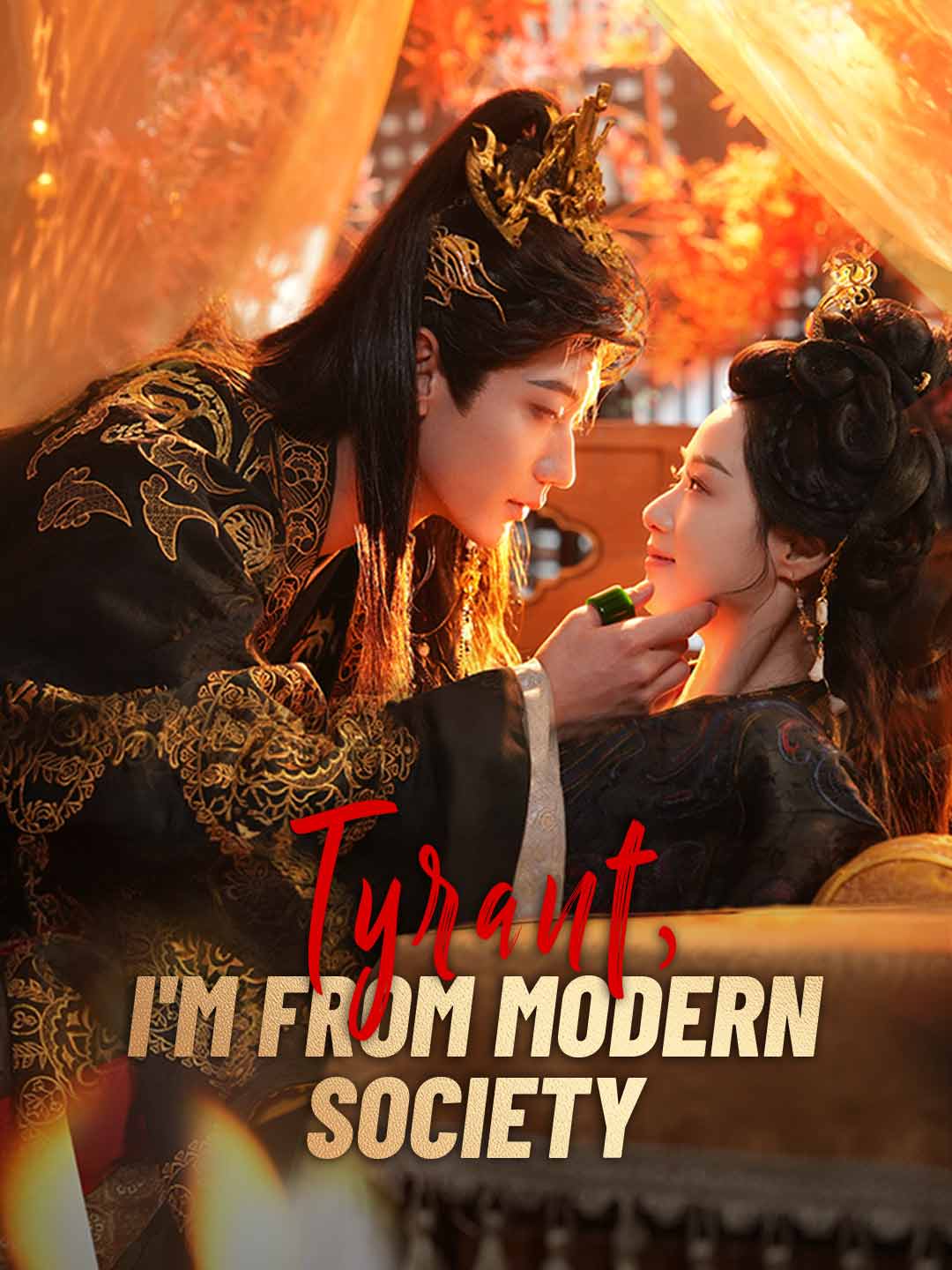
Tyrant, I'm From Modern Society
Hey, everyone! How's it going? Today I'm here to review the drama Tyrant, I'm From Modern Society (available on ReelShort), which arrived in 2026 with one of the most refreshingly inventive premises we've seen in short-form drama recently. This series brilliantly blends the escapist appeal of transmigration narratives with the psychological complexity of toxic romance, creating something that feels simultaneously familiar and entirely unexpected. The genius of this drama lies in its central hook: what happens when a modern woman is transported into a novel world, only to discover she's doomed to die within three days? The blend of survival thriller, historical romance, and meta-narrative commentary creates a compelling viewing experience that hooks audiences from the opening moments. What sets it apart from other transmigration dramas is its willingness to embrace the darker, messier aspects of attraction and survival, refusing to shy away from the moral ambiguity of its central relationship. The series targets audiences who crave intelligent heroines, complex male leads with genuine psychological depth, and narratives that explore how love can bloom in the most unlikely circumstances.
Tyrant, I'm From Modern Society arrives on ReelShort in a format specifically optimized for the platform's short-form storytelling approach, delivering 74 episodes of dense, emotionally charged content that maximizes the medium's unique strengths. The production quality demonstrates impressive attention to period detail, with lavish costume design and palace settings that rival many full-length dramas despite the condensed format. The visual style employs rich color grading—deep purples and golds dominating the imperial chambers, creating an atmosphere of danger and seduction intermingled. The cinematography captures intimate moments with remarkable nuance, utilizing close-ups and lingering shots to convey unspoken tension between characters. What distinguishes this production is its understanding that short-form content requires heightened emotional stakes and faster pacing without sacrificing character development. The editing is razor-sharp, cutting between scenes with precision that maintains momentum while allowing breathing room for character moments. The series demonstrates that ReelShort's format isn't a limitation but rather an opportunity for creators to distill storytelling to its most essential, potent elements.
The series masterfully explores themes of identity, survival, and the transformative power of love in unexpected places. At its core, Tyrant, I'm From Modern Society examines what happens when someone from the modern world—with modern sensibilities, knowledge, and perspectives—enters a rigid historical structure built on hierarchy, tradition, and absolute power. The drama interrogates toxic masculinity through its exploration of Damian's character, asking whether a tyrant can be redeemed through love and whether love itself can be genuine when built on power imbalances. Additionally, the narrative explores the theme of agency—how Luna maintains her identity and independence despite being trapped in a system designed to strip women of both. What truly sets Tyrant, I'm From Modern Society apart is its meta-narrative approach, where Luna's knowledge of the original plot becomes her greatest weapon and most significant burden. The show succeeds in creating genuine dramatic irony, where viewers understand the stakes Luna faces in ways other characters cannot, generating constant tension between what Luna knows will happen and her desperate attempts to rewrite her fate.
A Woman Against Destiny: Luna's Impossible Gambit
The story opens with Luna, a cultural relic restorer from the modern world, experiencing the disorienting moment of transmigration into a novel universe she somehow recognizes. She awakens in opulent palace chambers, dressed in elaborate historical garments, with the crushing realization that she's become Princess Luna—a character destined to die within three days of the narrative's opening. The initial confusion quickly transforms into existential dread as Luna comprehends her situation: she's trapped in a story where her death is already written, where the tyrant emperor Damian will personally execute her for reasons the original plot barely explained. The palace itself becomes a character—all soaring ceilings, shadowed corridors, and rooms that feel simultaneously beautiful and suffocating. Luna's first hours are spent in frantic observation, trying to understand the social hierarchies, the palace politics, and most crucially, how to avoid the fate that should claim her within seventy-two hours. The atmosphere crackles with tension as she realizes that every interaction, every word, every gesture could trigger the events leading to her death.
As the narrative unfolds, Luna's survival strategy evolves from desperate improvisation into calculated manipulation. She begins deliberately following the original plot while simultaneously introducing small variations designed to change Damian's perception of her. Each crisis she resolves showcases her modern knowledge applied to historical problems—she uses psychology, medicine, and logic in ways that seem almost magical to those around her. The series excels at pacing these revelations, allowing viewers to experience Luna's constant mental calculations alongside her external composure. What keeps viewers hooked is the escalating complexity of her situation: as she successfully prevents her own death, she simultaneously attracts Damian's attention in ways that create new dangers. The narrative brilliantly weaves together mystery elements—why was Luna originally killed? What makes Damian so dangerous? What secrets does the palace hide?—with the intimate character development of her growing connection to the emperor. Each episode raises new questions while answering previous ones, creating a narrative momentum that justifies the extended episode count.
Luna: The Modern Woman Rewriting Ancient Fate
Luna emerges as a protagonist who defies the typical damsel-in-distress archetype while remaining vulnerable and genuinely frightened by her circumstances. Her defining characteristic is her refusal to be passive despite her powerlessness—she actively strategizes, observes, and manipulates her situation with intelligence rather than relying on luck or external rescue. From her first appearance, Luna radiates intelligence tempered by desperation; she's simultaneously resourceful and terrified, creating a character that feels authentically human rather than superheroically competent. Her journey from panicked modern woman to cunning survivor showcases remarkable character growth, as she learns to navigate historical protocols while maintaining her core identity. What elevates Luna beyond typical transmigration heroines is her psychological realism—she experiences genuine trauma from nearly dying, struggles with the moral implications of her manipulations, and questions whether her feelings for Damian are genuine or survival-driven. The performance captures these internal conflicts through subtle shifts in expression, moments where Luna's mask slips and viewers glimpse her authentic fear and exhaustion beneath her calculated exterior.
What makes Luna particularly compelling is her relationship with knowledge and agency. Unlike other transmigration narratives where the protagonist uses modern knowledge as a straightforward advantage, Luna's knowledge of the plot becomes a psychological burden—she knows her own death is coming, knows the original narrative's trajectory, yet cannot fully trust her own understanding of events. She must constantly question whether her actions are changing fate or fulfilling it, whether her survival represents genuine victory or merely delayed tragedy. Her interactions with other palace characters reveal her capacity for genuine connection despite her strategic mindset; she forms real bonds with servants and ladies-in-waiting, creating emotional stakes beyond her relationship with Damian. The character represents the theme of identity preservation—Luna never stops being fundamentally herself, never fully assimilates into the historical world despite understanding its rules. She maintains her modern perspective, her humor, her values, using them as both shield and sword in navigating imperial politics.
Damian: The Tyrant with Cracks in His Foundation
Damian enters the narrative already established as a ruthless emperor, a man whose cruelty is legendary and whose unpredictability keeps the entire court in constant fear. Yet the series systematically reveals the trauma and isolation underlying his tyranny, creating a character who is simultaneously genuinely dangerous and deeply wounded. His initial interactions with Luna are marked by cold indifference bordering on contempt—she's simply another political piece to be manipulated or eliminated. However, as Luna consistently surprises him with her intelligence, her unexpected kindness, and her refusal to cower before him, something shifts in his perception. Damian becomes fascinated by this woman who seems genuinely unafraid of him, not because she's naive, but because she understands him in ways no one else does. The performance captures his gradual transformation beautifully, showing how his emotional walls begin cracking without ever fully disappearing—he remains fundamentally dangerous even as he becomes capable of genuine feeling.
What makes Damian a compelling rather than problematic love interest is the series' refusal to excuse his behavior while exploring its origins. His childhood trauma, his isolation in absolute power, his learned belief that love is weakness—these are presented as explanations, not justifications. Luna's role becomes partially therapeutic, but the drama never suggests that love alone can heal him or that his redemption is complete. Instead, it explores the complex reality of loving someone damaged and dangerous, the constant negotiation between accepting someone and enabling their harmful behaviors. Damian's arc involves genuine change—he becomes capable of vulnerability, of considering others' perspectives, of questioning his own assumptions—but he never becomes a different person entirely. The character arc suggests that growth is possible but incomplete, that love can transform someone without erasing their fundamental nature. His relationship with Luna becomes mutually transformative; she heals his loneliness while he forces her to confront questions about power, morality, and what she's willing to sacrifice for survival.
The Alchemy of Toxic Attraction: Where Love and Danger Converge
One of the series' greatest strengths lies in its unflinching exploration of attraction that blooms in psychologically fraught circumstances. The romance between Luna and Damian never feels sanitized or simplified—it's complicated, morally ambiguous, and genuinely dangerous. Early scenes showcase the charged tension of their interactions, where every word carries multiple meanings and every gesture could trigger violence or passion. The series uses the palace setting masterfully, with scenes of Luna and Damian navigating corridors, meeting in gardens at night, or sharing meals where the physical space itself becomes a character reflecting their relationship's dynamics. The visual language of these scenes employs lighting that emphasizes shadows and contrast, music that blends ominous tones with romantic undertones, and cinematography that captures both the beauty and menace in their proximity.
These moments resonate because they're grounded in genuine emotional truth rather than romanticized fantasy. The series acknowledges the problematic nature of their dynamic—the power imbalance, the coercion inherent in imperial politics, Luna's initial motivation rooted in survival rather than affection—while simultaneously exploring how authentic connection can develop even in toxic circumstances. The show uses dialogue to convey the psychological complexity of their bond; conversations between them carry weight and consequence, with words functioning as weapons, shields, and bridges simultaneously. What distinguishes this romance from typical historical dramas is its psychological honesty—Luna and Damian don't experience a sudden transformation into perfect partners. Instead, they negotiate constant friction, misunderstanding, and genuine conflict while developing real affection. The series demonstrates that love in dysfunctional circumstances doesn't erase the dysfunction but rather creates new layers of complexity where characters must choose repeatedly to trust, to be vulnerable, to risk further hurt.
Success on ReelShort: Finding the Perfect Platform
Tyrant, I'm From Modern Society has found its perfect home on ReelShort, where the platform's emphasis on emotional intensity and rapid-fire plot developments perfectly suits this drama's narrative style. The series benefits immensely from the short-form format, which allows for sustained tension and frequent cliffhangers that keep viewers returning for just one more episode. The episode structure enables the creators to maintain momentum while still allowing character-focused scenes that develop relationships and internal psychology. What distinguishes it in ReelShort's extensive catalog is its sophisticated approach to romance and psychological drama—it refuses easy answers or simplistic character categorizations, instead offering nuanced exploration of complex emotional situations.
The show particularly appeals to audiences who appreciate intelligent heroines, morally gray characters, and narratives that grapple with difficult questions about love, power, and survival. Its success on the platform demonstrates the appetite for sophisticated short-form content that doesn't sacrifice narrative complexity or character depth for brevity. The series proves that ReelShort audiences are willing to engage with psychologically complicated material, challenging romance dynamics, and stories that resist neat resolution. If you love Romance and Drama with Secret reveals, morally complex characters, survival narratives with emotional depth, and slow-burn relationships built on genuine connection despite dangerous circumstances, Tyrant, I'm From Modern Society is absolutely essential viewing.
A Story That Rewrites Itself: The Power of Defying Destiny
Tyrant, I'm From Modern Society represents a significant evolution in transmigration narratives, proving that the genre remains fertile ground for meaningful storytelling when approached with psychological sophistication and emotional honesty. It's a series that challenges viewers to examine their own assumptions about love, power, and redemption, proving that compelling drama emerges from complexity rather than simplicity. The combination of intelligent writing, nuanced performances, atmospheric production design, and willingness to explore morally gray territory creates an unforgettable viewing experience that will linger long after the final episode concludes. For viewers seeking emotionally intelligent entertainment that doesn't shy away from difficult questions, this drama delivers on every level. Don't miss this remarkable achievement in short-form storytelling.